



 6 / 98

Vodacom Group Limited
Integrated report for the year ended 31 March 2016
02
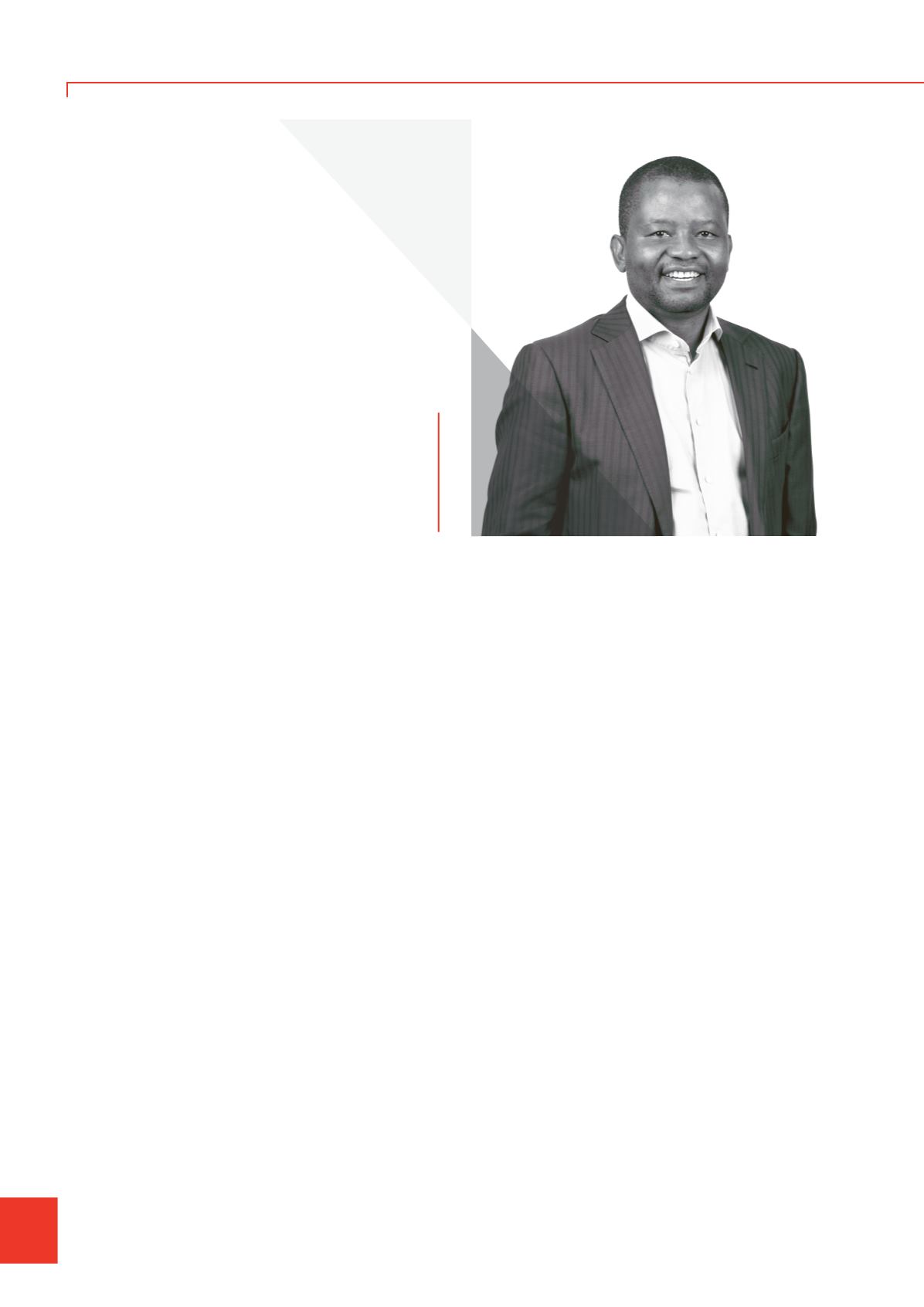
Peter Moyo
Despite the challenging operating context, this has
been a good year for Vodacom. We have continued
to deliver on our integrated growth strategy,
ensuring valuable returns to our shareholders while
making a significant developmental contribution in
our countries of operation.
Our delivery of both societal and shareholder value has been
underpinned by our substantial investment in network
infrastructure, and our strong customer focus.
This year, we invested R12.9 billion in our networks, targeted
primarily at expanding our 2G, 3G and LTE/4G coverage, enhancing
our network performance and improving the customer experience.
Over the last five years, we have invested more than R55 billion in
network infrastructure, reflecting our strong confidence in the
countries we operate in. By enhancing access to voice and data,
our network and service offerings are helping to transform lives
and stimulate economic growth in these emerging markets.
This has been a satisfying year for our shareholders: we delivered
a total shareholder return of 27.0%, with headline earnings per
share (HEPS) up 2.7% to 883 cents per share. We have continued
to return cash to shareholders in line with our dividend payout
policy of at least 90% of HEPS.
Our positive results this year have been achieved as a result of
our effective execution of the Group’s growth strategy and plan.
Our performance on this strategy is reviewed throughout this report,
and summarised in the CEO’s statement. This strategic focus has
assisted us in delivering excellent performance in the face of the
difficult market conditions across our operations.
Challenging business context in South Africa
During the latter part of the year, we have begun to see closer
dialogue between government and business, with government
leaders expressing their willingness to address some of business’s
key concerns. While we welcome these commitments, we are still
Chairman’s
statement
looking forward to greater clarity and speed in addressing some of
the constraints to deliver economic growth. For the telecoms sector,
a principal ongoing concern relates to the allocation of spectrum. As
an industry, telecoms can assist in delivering on the country’s growth
objectives; unfortunately the indecision in the allocation of spectrum
hampers this execution. While we have been encouraged by the
recent proposal by ICASA on how spectrum should be allocated, a
decision on the way forward is still pending from government. We are
hoping for clarity on this soon so that we can plan our investments
accordingly.
We put a lot of energy and commitment into the proposed deal
with Neotel, and were disappointed in the regulatory complexities
and certain unfulfilled conditions that resulted in our final decision to
terminate the deal. Our ambitions to execute on fixed-line still remain.
Responding to the operating environment in
our International markets
We have seen pleasing performance this year across our International
markets in customer and data penetration, net promoter score (NPS)
and revenue growth. This growth has been achieved in the context of
some significant regulatory and policy challenges.
Democracy is well entrenched in all the countries in which we
operate. During the year, we had free and fair elections in Tanzania
and Mozambique, and an election is due later this year in the DRC.
Customer registration is a key focus in each of these countries
where there is significant pressure to ensure rapid delivery under
challenging conditions. We have been working closely with
government in Tanzania and Mozambique in an effort to enhance
the efficiency and integrity of the registration process by facilitating
the transition from paper-based to electronic registration processes.
In the DRC, revised customer registration regulations have been
introduced that retain the existing paper-registration process, and
that institute very tight timeframes for disconnecting all unregistered
customers. We have implemented measures to ensure full
compliance, and are working with others in the sector and with
government to improve the efficiency of the process.